

Understanding Timber Treatment Levels in NZ: H3, H4 and H5 Explained
September 1, 2026 by Beams & Timber
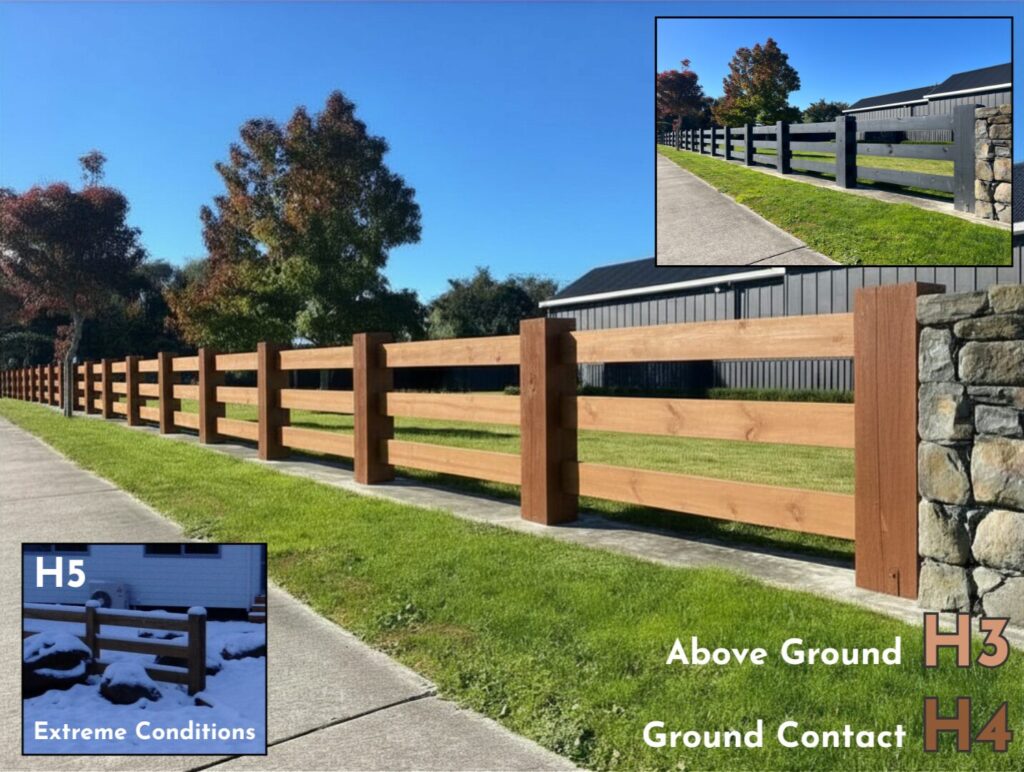
When planning a fencing project, most people focus on the design, style, or overall cost of the fence. However, one of the most important factors affecting the lifespan and performance of your fence is often overlooked — the timber treatment level.
If you’ve come across terms like H3, H4, and H5 and wondered what they mean, you’re not alone.
At Beams & Timber, we regularly help customers understand which timber treatment level is best suited for their project. Choosing the wrong treatment can lead to premature timber failure, costly repairs, and a fence that simply doesn’t stand up to New Zealand’s demanding conditions.
Let’s break down what these treatment levels mean and why they matter.
What Is Timber Treatment?
Timber treatment is a process that protects wood from environmental factors that naturally cause deterioration.
Untreated timber is vulnerable to:
- Moisture damage
- Fungal decay
- Insect attack
- Rot
- Structural weakening
To improve durability, preservatives are infused into the timber under pressure. The treatment level determines how much protection the timber receives and where it can safely be used.
The higher the hazard rating, the greater the level of protection.
Why Timber Treatment Is So Important in New Zealand
New Zealand presents some unique challenges for outdoor timber structures.
Our environment regularly exposes timber to:
- High rainfall
- Humidity and moisture fluctuations
- Strong UV radiation
- Coastal salt exposure
- Ground movement
- Seasonal temperature changes
A fence that may perform well in a dry climate can deteriorate much faster when exposed to New Zealand’s conditions.
That’s why selecting the correct treatment level is critical for long-term performance.
H3 Timber – Suitable for Above Ground Use
H3 timber is treated for situations where the timber is used outdoors but remains above ground and can dry out relatively easily.
Common Uses for H3 Timber
- Pergolas
- Cladding
- Deck handrails
- Outdoor framing above ground
- Landscaping features with minimal ground contact
Advantages of H3 Timber
✅ Cost-effective
✅ Suitable for many exterior applications
✅ Protected against fungal decay and insects
Limitations of H3 Timber
❌ Not designed for constant ground contact
❌ Not suitable for fence posts
❌ Higher risk of deterioration when buried in soil
While H3 timber has its place, it should not be used for structural fence posts that are in direct contact with the ground.
H4 Timber – The Standard Choice for Most NZ Fencing
When it comes to fencing, H4 treated timber is generally considered the industry standard.
H4 timber is specifically designed for ground contact applications and offers significantly greater protection against moisture and decay.
Common Uses for H4 Timber
- Fence posts
- Boundary fencing
- Garden structures
- Outdoor landscaping
- Retaining structures with moderate exposure
Why H4 Works So Well for Fencing
💪 Designed for direct soil contact
💪 Excellent resistance to decay
💪 Suitable for long-term outdoor exposure
💪 Proven performance throughout New Zealand
Most quality timber fencing systems throughout New Zealand rely on H4-treated posts because they provide the ideal balance between durability, performance, and cost.
H5 Timber – Maximum Protection for Demanding Conditions
H5 timber receives a much higher level of treatment and is designed for situations where timber faces extreme environmental conditions.
This treatment level offers heavy-duty protection and is commonly used in structural applications.
Common Uses for H5 Timber
- Retaining walls
- Structural landscaping
- High-moisture environments
- Agricultural structures
- Coastal applications
- Critical support posts
Benefits of H5 Timber
✅ Maximum durability
✅ Exceptional resistance to decay
✅ Ideal for harsh environments
✅ Long service life
Because of its superior protection, H5 timber is often chosen where failure is simply not an option.
Comparing H3, H4 and H5 Timber
H5 timber receives a much higher level of treatment and is designed for situations where timber faces extreme environmental conditions.
H3 Timber
Best For: Above-ground structures
Ground Contact: No
Typical Fencing Use: Rails and components above ground
H4 Timber
Best For: Fence posts and outdoor structures
Ground Contact: Yes
Typical Fencing Use: Standard fencing applications
H5 Timber
Best For: Structural and extreme environments
Ground Contact: Yes
Typical Fencing Use: Heavy-duty and high-exposure projects
Choosing the Right Timber for Your Fence
One of the biggest mistakes property owners make is assuming all treated timber is the same.
Unfortunately, choosing a lower treatment level than required can result in:
❌ Premature rot
❌ Weakening fence posts
❌ Increased maintenance
❌ Shortened fence lifespan
❌ Expensive repairs or replacement
Choosing the correct treatment from the beginning helps ensure your fence delivers long-term performance and value. 🤝
Treatment Matters — But So Does Construction
Even the best-treated timber can underperform if the fencing system itself is poorly designed.
At Beams & Timber, we believe long-lasting fencing requires both:
✅ Properly treated timber
✅ Strong construction methods
That’s why our INTERLOCK® fencing system has been designed to eliminate many of the weak points found in traditional fencing.
By combining quality treated timber with superior structural design, property owners can enjoy a fence that looks great and performs exceptionally well for years to come.
Invest in the Right Timber from Day One
A fence is more than just a boundary — it’s an investment in your property’s appearance, functionality, and long-term value.
Choosing the right timber treatment level helps ensure your fence can withstand everything New Zealand throws at it, from heavy rain and harsh UV exposure to ground movement and changing seasons.
When done right, a properly treated timber fence doesn’t just last longer — it performs better.
Ready to Build a Fence That Lasts?
Whether you’re fencing a residential property, lifestyle block, rural boundary, or commercial site, selecting the right timber treatment is one of the most important decisions you’ll make.
At Beams & Timber, we’re here to help you choose the right materials and the right fencing system for your project.
🪵 Premium timber products
💪 Built for New Zealand conditions
⭐ Trusted by property owners across NZ